Consumer protection notice · Deceptive supplement marketing
Glyco Barrier: The Documented Marketing Scam, and the Real Ingredients Behind It
This page is not a product review, and it contains no affiliate or purchase links. An established fraud-research organization has documented a deceptive marketing pattern tied to this exact product. We've also gone further this time: a full, honest breakdown of the eight ingredients actually in the formula, and the real medication interactions worth knowing about.
The Short Version
We are not reviewing or recommending Glyco Barrier here. An established cybersecurity and fraud-research organization, MyAntiSpyware (publishing consumer-protection fact-checks since 2004), investigated marketing for this exact product and concluded it follows a documented health-marketing scam pattern: an AI-generated video appearing to feature Dr. William Li (who has not endorsed the product), a "secret recipe" that's never actually delivered, an unproven claim about a parasite causing diabetes, and reports of hidden recurring charges. Separately, we've reviewed a differently-styled marketing page using the same eight-ingredient formula that does not show those specific tactics — it's detailed, names real interaction risks, and explicitly says it doesn't treat diabetes. We're presenting both: the documented scam pattern tied to this product's marketing, and an honest look at what's actually in the bottle.
What We Know
- Product type
- Liquid dropper, blood sugar / glucose metabolism support
- Ingredients
- 8 named: Berberine, Ceylon Cinnamon, Gymnema Sylvestre, Bitter Melon, Banaba Leaf, Chromium Picolinate, Juniper Berry, Licorice Root
- Dosing
- Per-ingredient amounts not published
- Documented marketing tactic
- AI-generated video resembling Dr. William Li — not a real endorsement
- Medical claim made (elsewhere)
- Implies it can "reverse" type 2 diabetes — unproven
- Real interaction risk
- Berberine, Chromium, and Licorice Root can each interact with common medications
- Price observed
- $39–$59/bottle depending on bundle size, per a marketing page we reviewed
- Primary sources
- MyAntiSpyware.com fact-check (Sept 2026); a separate ingredient-focused marketing page (2026)
What Glyco Barrier Is Marketed As
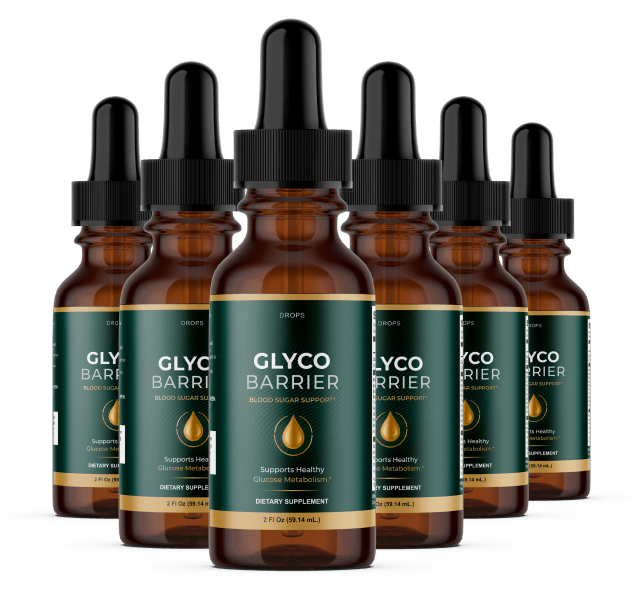
Glyco Barrier is sold as a liquid dropper supplement, 2 fl oz (59.14 mL), labeled "Blood Sugar Support" and "Supports Healthy Glucose Metabolism." The bottle is a standard amber dropper bottle with a dark green-and-gold label. Marketing built around this same formula frames it as a once-daily, stimulant-free liquid, taken under the tongue or mixed into a beverage, positioned for adults managing blood sugar swings, sugar cravings, and afternoon energy dips — not as a diabetes treatment.
That framing and the physical label aren't unusual for this product category on their own. The concern documented by outside researchers is in a specific set of video advertisements used to drive people to buy it, covered next.
The Marketing Tactics Documented
According to the fact-check published by MyAntiSpyware, an information-security research organization operating since 2004, Glyco Barrier has been promoted through long-form video advertisements that follow a specific, recognizable pattern also seen in several similar supplement campaigns they've covered:
- A promised "secret recipe" that never arrives. The videos build anticipation around a simple household remedy — olive oil, cinnamon, honey — but the recipe is never actually given. Viewers are redirected to a checkout page for Glyco Barrier drops instead.
- An AI-generated video resembling Dr. William Li. Some versions of the ad use a manipulated or AI-generated likeness of Dr. William Li, a real physician and researcher, in a way that implies his endorsement. According to the fact-check, he has not endorsed a special recipe or Glyco Barrier for reversing type 2 diabetes.
- News-style branding. The sales presentation reportedly borrows visual styling associated with major news organizations, including CNN, to create a false impression of independent journalistic coverage.
- An unproven "parasite" theory. The marketing reportedly claims a parasite living in the pancreas is a hidden cause of type 2 diabetes, and that Glyco Barrier addresses it — a medical claim with no credible clinical basis.
- Research on ingredients, not the product. Studies cited in the marketing reportedly concern individual ingredients like berberine in isolation, not the finished Glyco Barrier formula. This detail is confirmed by other marketing for the same formula too, which states outright: "these citations refer to research on the individual ingredients, not the finished product, which has not been the subject of its own clinical trial."
We have not independently re-verified every one of these claims through our own video review; we are relaying and summarizing MyAntiSpyware's documented findings, and we've linked their full write-up in the sources section below so you can read their reporting directly. Separately, a differently-styled marketing page we reviewed for this same eight-ingredient formula does not use a "secret recipe" hook, does not reference Dr. Li or any celebrity, and does not use the parasite theory — it's a more conventional, ingredient-forward sales page. We can't confirm whether this represents the same sellers using a different, more careful approach on one channel while the deepfake-video approach runs elsewhere, or a separate reseller of the same formula. Given the documented history, we'd treat any marketing for this specific ingredient combination with real caution regardless of which version you encounter.
The Real Ingredients, One By One
Whatever you think of the marketing around it, here's what's actually named as being in the bottle: eight ingredients, none with a disclosed per-dose amount.
| Ingredient | Honest role |
|---|---|
| Berberine | The best-evidenced ingredient in this formula for glucose metabolism and fasting blood sugar; also the one with the most well-documented medication-interaction profile |
| Ceylon Cinnamon | Studied for post-meal glucose response; generally considered milder than Berberine |
| Gymnema Sylvestre | Traditional Ayurvedic herb associated with reduced sugar cravings |
| Bitter Melon | Traditionally used for glucose support; contains compounds studied for glucose utilization |
| Banaba Leaf | Sometimes standardized for corosolic acid content; studied for glucose metabolism |
| Chromium Picolinate | An essential trace mineral with a real, documented role in carbohydrate and fat metabolism |
| Juniper Berry | Traditional botanical included for general antioxidant activity |
| Licorice Root | Traditional botanical; a real, specific caution applies (see below) — not suitable for long-term high-dose use and can raise blood pressure |
Several of these do have real, published research relevant to blood sugar metabolism, particularly Berberine and Chromium. What's missing, consistently across every version of this marketing we've seen, is any disclosed amount for any of the eight. Without a milligram figure, there's no way to compare what's actually in the bottle against the doses used in the research being cited to sell it.
Medication Interactions Worth Knowing
This is worth a section of its own, because it's a real, specific, checkable safety concern independent of the marketing issues above. Three of the eight named ingredients carry documented interaction potential:
- Berberine can interact with medications for blood sugar and blood pressure, and with certain other drugs metabolized through the same liver pathways.
- Chromium Picolinate can affect blood sugar levels and may interact with diabetes medication, potentially requiring dose adjustments under medical supervision.
- Licorice Root can raise blood pressure and interact with medications for blood pressure and blood clotting, and is specifically not recommended for long-term, high-dose use.
If you take medication for blood sugar, blood pressure, or blood clotting, this combination of three interacting ingredients in one formula is a genuine reason to talk to a doctor before using any product built on this formula — regardless of which specific brand or marketing page you encountered it through.
The Medical Claims, and Why They're a Concern
Type 2 diabetes is a serious, chronic medical condition. Marketing that implies a supplement can "reverse" it, eliminate its underlying cause, or replace prescribed treatment is a meaningfully different and more dangerous category of claim than the usual supplement-marketing hype. If someone believes a bottle of drops can reverse their diabetes, the realistic risk isn't just wasted money — it's someone delaying or stopping medication that's actually managing their condition, based on a claim with no credible clinical evidence behind it.
This is the central reason we're publishing this as a warning rather than a scored review: the pattern documented here isn't "some marketing claims are exaggerated." It's a specific set of findings — an AI-faked endorsement from a real, named doctor, a bait-and-switch "secret recipe" hook, and an unproven disease-reversal claim — that together describe deceptive health marketing, not just aggressive sales copy. Worth noting: even the more conventional marketing page we reviewed for this same formula is explicit that it "is not a treatment for diabetes, prediabetes or any diagnosed medical condition" and that it "should never" replace diabetes medication — which is the correct, responsible position, and stands in direct contrast to the "reverses diabetes" framing documented elsewhere for the same underlying product.
What We Know About Pricing and Billing
Per the fact-check, Glyco Barrier has been sold in multi-bottle packages, with a six-bottle "Best Value" option historically priced around $234. A separate marketing page for the same formula that we reviewed shows a similar structure: 2 bottles at $59/bottle ($118 total), 3 bottles at $49/bottle ($147 total, described against a $69/bottle reference), and 6 bottles at $39/bottle ($234 total, also against a $69/bottle reference) — all described as one-time purchases with a 60-day guarantee. This general package structure is common across this product category and isn't unusual on its own.
What is a genuine concern: the original fact-check reports that some customers have encountered recurring monthly charges that weren't clearly disclosed at checkout, and refund complaints. If you're evaluating a product built on this formula, we'd treat any checkout page for it with real caution — read every line before entering payment information, and don't assume a single up-front price is the only charge you'll see.
If You've Already Purchased It
If you've bought Glyco Barrier and are concerned about any of the above, a few concrete steps:
- Check your bank or credit card statement for recurring charges you didn't expect, going back to your purchase date.
- Contact your card issuer if you see unauthorized or unexpected billing, and ask about disputing the charge.
- Report it to the Federal Trade Commission at reportfraud.ftc.gov, or to the Better Business Bureau at bbb.org, or your national consumer protection agency if you're outside the US.
- Keep records. Screenshots of the ad, the checkout page, and your order confirmation can help if you need to dispute a charge or file a report later.
- If you take medication for blood sugar, blood pressure, or blood clotting, tell your doctor you're taking this product, given the real interaction potential of Berberine, Chromium, and Licorice Root described above.
- Talk to a doctor about your actual blood sugar management, especially if anything in the marketing led you to consider changing or stopping prescribed medication. Don't make that decision based on a supplement ad.
Common Questions
Is Glyco Barrier a scam?
An established fraud-research organization concluded its video marketing is deceptive, based on the AI-generated endorsement, the bait-and-switch fake recipe, the unproven parasite claim, and hidden-billing reports. Separately, other marketing for the same ingredient formula reads as more conventional and doesn't use those tactics. We're relaying documented findings alongside the product's actual ingredient list, not concluding every version of its marketing is fraudulent.
Did Dr. William Li endorse Glyco Barrier?
No, according to the source we reviewed. The video used in some marketing is described as an AI-generated or manipulated likeness, used without his involvement.
What's actually in it?
Eight named ingredients: Berberine, Ceylon Cinnamon, Gymnema Sylvestre, Bitter Melon, Banaba Leaf, Chromium Picolinate, Juniper Berry, and Licorice Root, with no disclosed dose for any of them. See our full breakdown.
Does it interact with medication?
Potentially yes — Berberine, Chromium Picolinate, and Licorice Root can each interact with blood sugar, blood pressure, or blood-clotting medication. See our interactions section.
Can it really reverse type 2 diabetes?
No. There's no credible evidence for this claim, and it should never replace prescribed diabetes management.
What should I do if I already bought it?
See our step-by-step guidance above, starting with checking your statement for recurring charges.
Sources
This page summarizes and links to reporting from an independent, established fraud-research organization, alongside our own reading of a separate, publicly available marketing page describing the same ingredient formula. We encourage you to read the original reporting directly.
- MyAntiSpyware.com. Glyco Barrier Blood Sugar Support Reviews, Dr. William Li AI Scam (September 16, 2026).
- Federal Trade Commission. Report Fraud to the FTC.
- Federal Trade Commission. Health Products Compliance Guidance.
- National Institutes of Health, Office of Dietary Supplements. Chromium fact sheet.
- National Center for Complementary and Integrative Health. Licorice root overview.
- PubMed. Berberine and glucose metabolism research.
- American Diabetes Association. Diabetes care and management resources.
The Bottom Line
- Glyco Barrier's video marketing has been documented by an independent fraud-research organization as using an AI-generated endorsement resembling Dr. William Li, who has not endorsed the product.
- A promised "secret recipe" is never delivered in that marketing; viewers are redirected to a purchase page instead.
- Claims that it can reverse type 2 diabetes are unproven and should not replace medical care.
- The formula names 8 ingredients (Berberine, Ceylon Cinnamon, Gymnema Sylvestre, Bitter Melon, Banaba Leaf, Chromium Picolinate, Juniper Berry, Licorice Root), with no doses disclosed for any of them.
- Berberine, Chromium Picolinate, and Licorice Root can each interact with medication for blood sugar, blood pressure, or blood clotting — a real, specific reason to talk to a doctor first.
- This page contains no affiliate or purchase links — it exists to inform, not to sell.